New Doors · Milton
Commercial Sectional Door Repair
The door reaches the floor, then reverses before staying closed. The threshold is clear, but a sensing edge is distorted and one photoelectric sensor has moved out of line with its partner.
Commercial Sectional Door Repair
In plain words
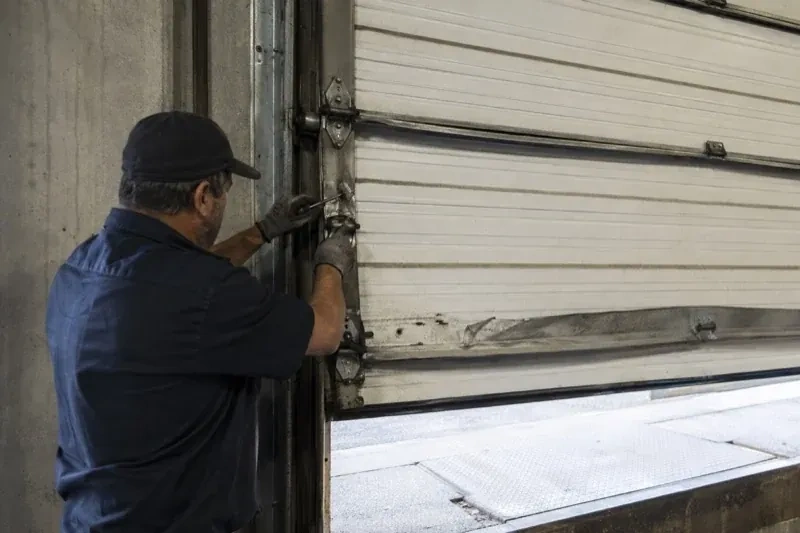
When a bay door hangs crooked, the visible angle is often only the starting clue. A technician compares cable tension on both sides, checks how each cable sits on its drum, examines bottom fixtures and looks for a shifted track or damaged roller. The door is supported before tensioned parts are handled. Once the cause is corrected, the cables are seated, the door is levelled and balance is checked through travel. Powered limits and protective devices are tested afterwards, because the operator depends on a mechanically sound door.
How the visit goesCold weather has exposed a widening gap below the closed door. The bottom retainer is bent, the rubber seal is split, and uneven seating lets drafts and slush enter the work area.
Milton
How the visit goes
Reading an uneven door
A crooked bottom edge leads to a side-by-side comparison. Cable condition and length, drum grooves, shaft position, bearing movement and bottom fixtures are viewed together. The technician notes whether one cable is slack, crossed or frayed and whether a roller has left its normal track position. Measurements at the tracks show if the guides remain parallel and plumb. The door is then secured so its weight cannot deepen the imbalance during inspection. These findings reveal whether the repair belongs in the lifting system, track alignment or impact-damaged hardware.
Controlling the door before repair
Work begins by separating the bay from normal traffic and placing the door in the safest workable position for the identified fault. Electrical controls are isolated where the task calls for it, and the assembly is held with clamps, locking pliers or rated supports suited to its weight and track type. Stored spring force is managed with proper winding tools and a planned sequence. With movement controlled, hardware can be removed without letting a crooked section, slack cable or broken spring shift the rest of the system.
Level movement through the opening
After cable, spring or track work, the door should rise with its bottom edge level and move without a side lag. Facility staff can watch the first few routine cycles from a clear position and note whether both cables remain neatly seated on their drums. A new tilt, rubbing sound or loose strand is useful information to report before the opening sees heavier traffic. Keeping pallets and vehicles outside the marked travel zone also protects the restored alignment and gives operators a clear view of the complete door path.
Commercial Sectional Door Repair
In the van
- Commercial rollers
- Lift cables and drums
- Commercial door sections
- Bottom fixtures
- Shafts and bearings
What affects the quote
Same fees day, night or weekend
1Section construction and finish
Steel, aluminum, insulated sandwich and full-vision sections have different profiles, reinforcement, glazing and hardware patterns that affect matching and replacement scope.
2Corrosion and seized fasteners
Moisture and salt can affect cables, brackets, retainers, rollers and connections, broadening the repair when hardware cannot be removed or reused cleanly.
3Counterbalance components involved
Spring count, shaft arrangement, drum type, cable dimensions, bearings and bottom fixtures determine which tensioned parts must be controlled, replaced and reset together.
Commercial Sectional Door Repair: questions
Can several doors be assessed during one facility visit?
Yes. Numbering each opening and providing a short symptom list keeps the assessment organized. The technician can define the requested repair for the affected door and record visible conditions on comparable doors separately. Shared model data and installation history may help with parts planning, while each opening still receives its own mechanical and control checks before any work is scoped.
Does a torn bottom seal always mean a seal-only repair?
Not always. The rubber may simply be worn, but a bent retainer, uneven floor, crooked door or impact-damaged bottom section can produce the same gap. The technician checks how the door lands before replacing material. Correcting level or retainer shape first allows the new seal to contact evenly without being stretched to compensate for another fault.
Why are the hinges numbered along the sides?
Numbered end hinges position each roller progressively farther from the panel as the sections rise. That changing offset lets the stacked door follow the track curve while maintaining its shape. Installing a hinge in the wrong position can alter alignment and clearance. Centre hinges have a different role: they connect sections across the width without carrying track rollers.
Installation & Upgrades
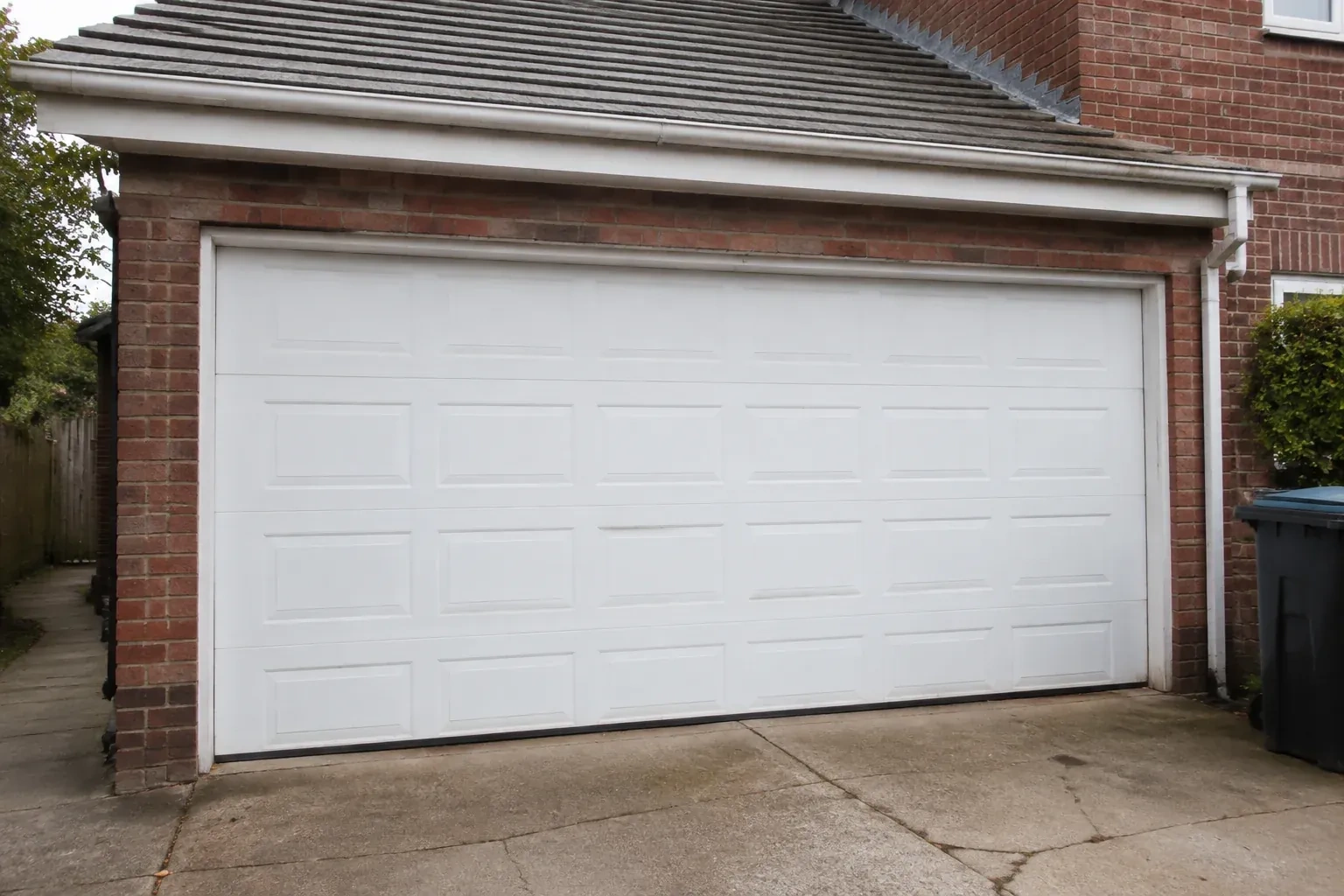
- Insulated Steel Garage Door InstallationA refreshed exterior has made the faded garage door stand out.
- Wind-Rated Garage Door ReplacementThe property faces open fields, leaving the garage frontage more exposed than neighbouring homes…
- Carriage-House Garage Door InstallationTwo garage openings sit side by side, and small differences in window spacing or decorative…
Commercial Sectional Door Repair near you
The list below is what a garage door technician in Milton actually does in a week: replaces springs and cables, resets doors that jumped the track, fixes and replaces openers, programs remotes and keypads, changes seals and rollers, tunes and balances doors, and installs new ones.