Springs · Milton
Torsion Spring Replacement in Milton
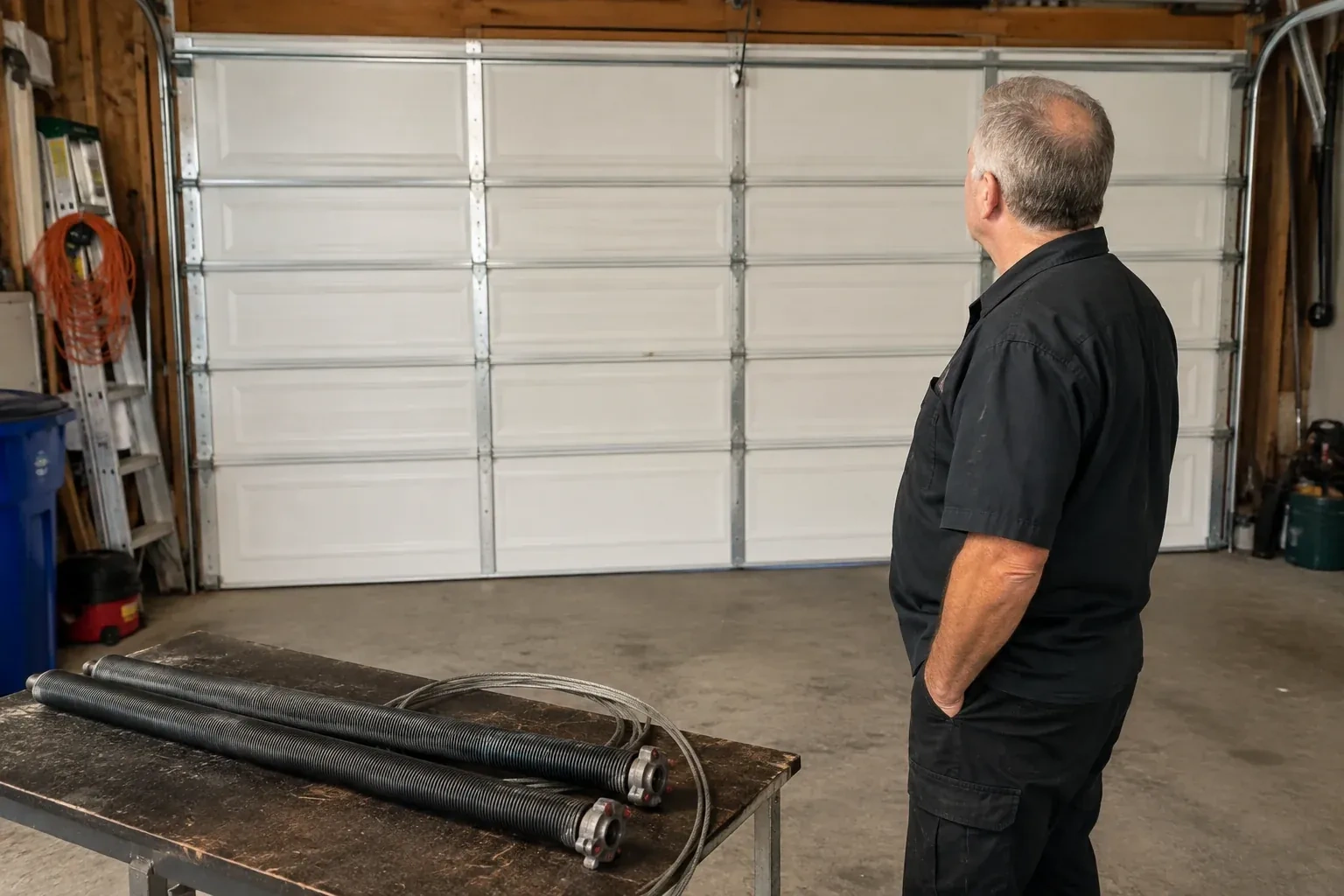
Nothing broke outright, but the door has grown heavier each winter, opens more slowly and squeals as it moves. The springs on an older door have lost tension and the coils show pitting, so the system is asking for attention before it fails.
Torsion Spring Replacement
In plain words
The heart of this service is matching, not just swapping. Two springs can look identical and behave very differently, because the force a torsion spring produces depends on its wire thickness, inside diameter, length and wind direction, and the right combination depends on the door's weight, height, drum type and track lift. The technician measures all of those before choosing a spring, then confirms the choice the only way that counts: lifting the finished door by hand and feeling it stay put at waist height. A properly matched spring lasts longer and keeps the opener working easily.
How the visit goesAfter pulling the red release cord, you tried lifting the door yourself and it would barely leave the floor. A door that used to glide up with one hand now takes real effort, which points to the counterbalance rather than the opener.
Milton
How the visit goes
Reading the spring itself
The first measurements come from the spring that is already on the shaft. The technician measures wire thickness across a run of ten or twenty coils, the inside diameter of the coil, the overall length of the spring when relaxed, and the wind direction, which is read from how the coils lean. On a two-spring door each spring is checked separately, because a left-wound and a right-wound spring sit on either side of the centre bracket. Any tag or colour marking is noted too. These numbers narrow down what the door was built with, and together with the door's weight they point to the correct replacement.
Winding with control
Winding is where a spring takes on its working tension, and it is done with two solid steel bars sized to the holes in the winding cone. The technician stands to the side of the cone, inserts one bar, turns a quarter turn, inserts the second bar, and transfers the load from bar to bar so the spring is never held by less than a full bar. The number of quarter turns is counted against the door height and drum type. When the count is reached, the spring is stretched slightly toward the drum and the set screws are tightened to the shaft while the last bar still carries the load.
Signs worth noticing going forward
A healthy spring system is quiet and even, so changes stand out. Listen for a new grinding or popping sound as the door moves, watch that both sides of the door rise together, and look at the cables for fraying or a loop that has left the drum groove. Rust streaks below the shaft, a door that takes noticeably more effort by hand, or an opener that starts to strain are all early indicators that something in the balance system wants attention. Catching these early keeps repairs small and lets the household plan a visit rather than face a stuck door.
Torsion Spring Replacement
In the van
- Torsion springs, oil-tempered or galvanized
- Stationary cone bolts and nuts
- Garage-door spring lubricant
- Centre bearing bracket and bearing
- Lift cables
What affects the quote
Same fees day, night or weekend
1Converting from extension springs
Moving a door from extension springs to a torsion system adds a shaft, bearings, drums and brackets, and removes the old pulleys, which is a broader job than replacing an existing torsion spring.
2Spring finish
Oil-tempered and galvanized springs suit different garages. A coated or galvanized spring for a damp or salt-exposed space is a choice the customer can make when the specification is discussed.
3Age of the door and matching hardware
Older doors sometimes carry shaft diameters, bearing plates or drum patterns that are no longer common. Sourcing compatible hardware or adapting the mounting adds to the scope for these doors.
Torsion Spring Replacement: questions
What is the difference between torsion and extension springs?
Torsion springs mount on a shaft above the door and twist to store energy, lifting the door through cables and drums. Extension springs run alongside the horizontal tracks and stretch as the door closes, pulling it up through pulleys. Torsion systems tend to lift more evenly, take up less space beside the tracks and are the standard on most modern doors. Both are professional service items because of the energy they hold.
What other parts are often replaced with the spring?
The shaft is free during a spring change, which makes it the natural time to renew the centre bearing and end bearings if they grind or wobble. Lift cables that show fraying or rust at the bottom brackets are replaced so the new spring pulls on sound steel, and cracked or worn drums are swapped. On older doors, a corroded centre bracket or loose lag bolts may also be addressed. Each item is shown and explained before it is added.
How often should the springs be lubricated, and with what?
Once or twice a year is a good rhythm, with autumn the most useful time because cold thickens grease. Use a garage-door lubricant, typically a silicone or lithium spray, applied along the coils so it works between them as the door cycles. Hinges, roller bearings and the end bearings benefit from the same treatment. Keep the track itself dry, since lubricant there gathers grit and slows the rollers.
Springs & Hardware
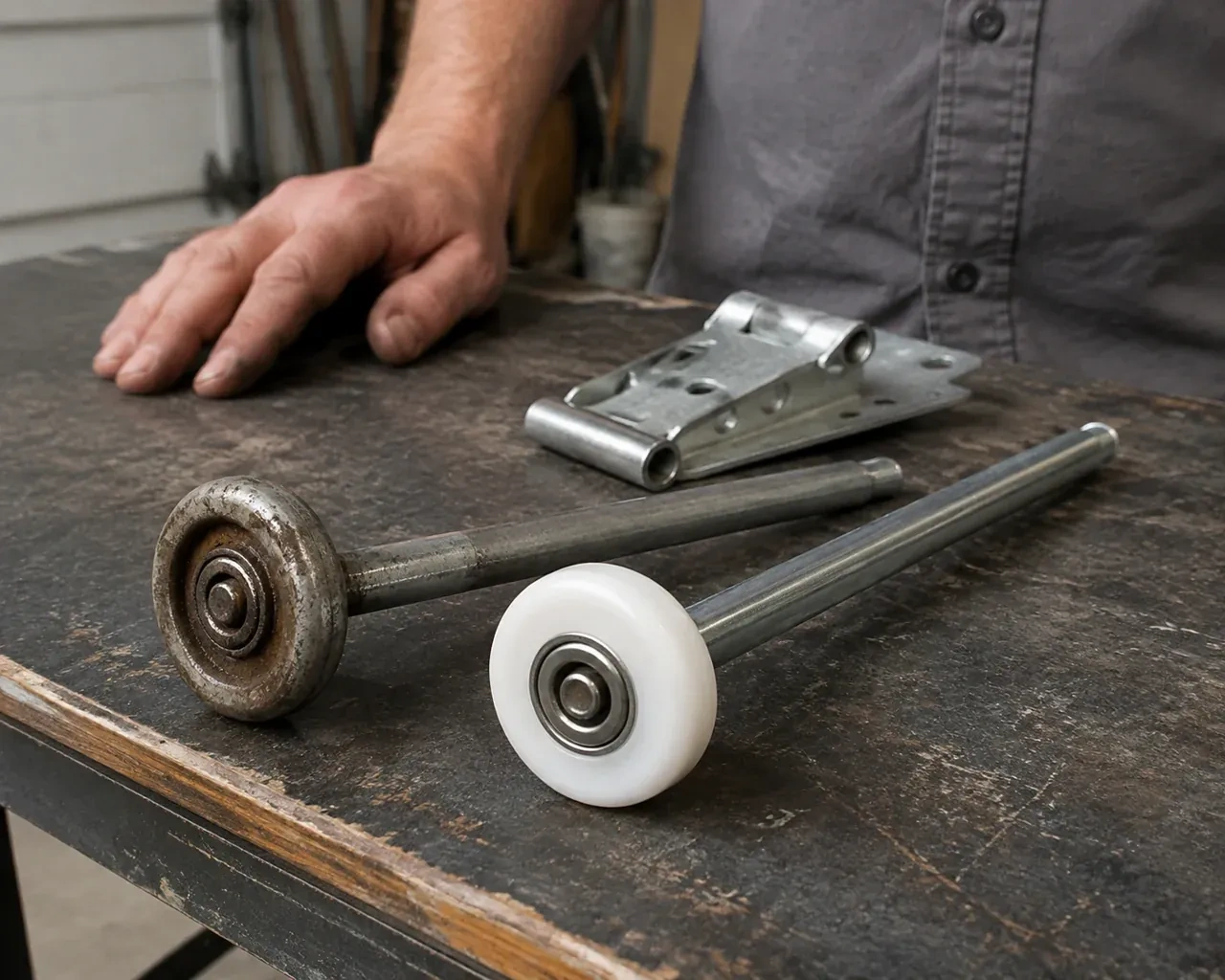
- Garage Door Hinge ReplacementPressing a hand against one of the middle hinges makes it rock on the panel.
- Garage Door Track Repair or ReplacementHalfway up, the door lurches and one roller rides onto the lip of the channel.
- Garage Door Cable ReplacementAfter years of slushy winters the cables look thinner near the bottom brackets, with rust streaks…
Torsion Spring Replacement near you
The list below is what a garage door technician in Milton actually does in a week: replaces springs and cables, resets doors that jumped the track, fixes and replaces openers, programs remotes and keypads, changes seals and rollers, tunes and balances doors, and installs new ones.