Campbellville Garage Door Specialists
Issue 3 of 3Garage DoorsMilton, Ontario
Garage Door Panel Replacement: inside the visit
Everything about a section replacement flows from knowing exactly which door you have.
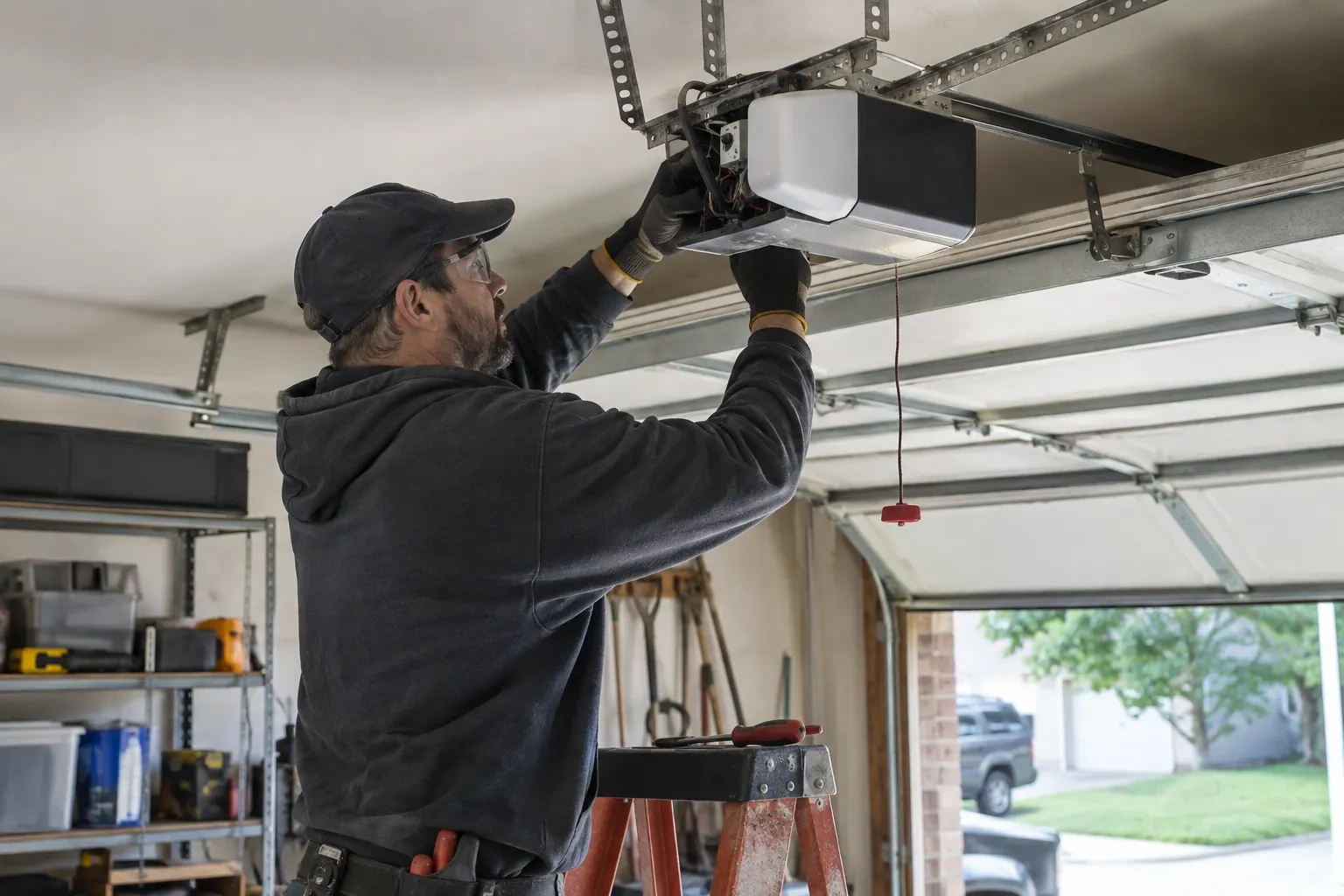
Everything about a section replacement flows from knowing exactly which door you have. Two doors that look alike from the driveway can differ in section height, thickness, the shape of the joint where sections meet, where the hinges bolt on and how the skin is embossed. A new section has to share all of those details to seat cleanly against its neighbours. So the visit starts with a hunt for the manufacturer's label, usually on the edge of a section or on the track, followed by measurements and photographs. With that identity confirmed, the right section can be ordered with confidence rather than hope.
Is a matching section still made?
Once the door is identified, the technician contacts the manufacturer or distributor to confirm that a section for that model, position and size can still be supplied, and in which colours. Door designs change over the years: embossing patterns, joint profiles and section heights get revised, and colours are retired. If the exact section is current, the order is straightforward. If the design has been discontinued, the conversation turns to the nearest current match and what the visual difference would be, or to replacing the door as a whole. The lead time for a made-to-order section is confirmed at the same time so you can plan.
Locking the door before anything comes loose
The exchange begins with the door closed, the opener disconnected at the release cord and its power unplugged, and a pair of locking pliers clamped onto each track just above a roller. Held that way, the door cannot creep up or slip down while a section is missing from it, and the sections above the gap have something to rest on. The technician then removes the section's rollers and hinges in an order that keeps the neighbouring sections supported, working from one side to the other. Nothing under spring tension is touched at this stage on a middle or top section; the springs stay loaded and simply hold still.
Checking balance and reversal yourself
Two simple checks tell you the door is still healthy after the repair. With the door closed, pull the release cord and lift it by hand; it should rise smoothly and stay put around waist height. A little slow drift is normal, but a door that rises or sinks on its own, or feels heavy, is asking for a spring adjustment before anything wears. Reconnect the opener, then lay a piece of wood flat on the floor under the door and close it; the opener should touch the wood and reverse. Pass a carton through the photo-eye beam while standing clear of the door as it closes, and watch it stop and return. Trade associations recommend running these checks monthly.